
Camera inspection: $300–$750
The first and non-negotiable step. Most operators credit it against the works if you proceed.
A cracked or root-damaged drain does not have to mean a trench through the garden. A resin liner is cured inside the existing pipe from an access point you already have, sealing every joint along the run, and the surface above is never touched.
A resin-saturated liner is drawn into the existing pipe through an access point, inflated so it presses against the wall, and cured until it hardens. What you are left with is a continuous pipe inside the old one, with no joints along its length and a slightly smaller bore than the original.
Nothing is excavated, and the cured surface is smoother than the clay or concrete it lines, so flow is typically maintained or improved despite the small loss of diameter. On a property where a driveway, mature garden or paving sits over the line, that is the whole argument.

Rows of terraces feed a single common sewer, so one neighbour’s wipes or grease can back up the whole row, a classic Darlington call-out.
For a shop, café or clinic the real cost of a drainage repair is rarely the invoice. It is the days the doors do not open, and an excavation through a floor or a car park is measured in days.
A liner is installed from an existing access point and cures in hours, which is why commercial work is so often scheduled overnight or across a single closed day. The trading interruption is usually the deciding factor, not the price per metre.
Almost fully paved and built out, the suburb sheds every drop of rain straight into ageing drains in the old Blackwattle Creek catchment, which surcharge quickly in storms.
Most people associate relining with sewers, but stormwater suffers the same failures and reline just as well: cracked lengths, open joints, roots, and sections that have silted because the fall has flattened. On a property that floods in every serious downpour, the line is often the reason rather than the rain.
The camera run matters more here than anywhere. Clearing a surcharging pit at the height of a storm tells you almost nothing; the same line inspected on a dry day tells you whether you have a blockage or a defect.
People are often surprised that a drain laid before the war is a relining candidate rather than a replacement. Age alone does not decide it. A clay line with a sound barrel and tired joints is close to the best case for a liner.
The cases that genuinely need excavation are different: a collapsed section, a run that has lost its fall, or a pipe crushed out of round. A camera separates those in an hour, and the answer changes the cost by a multiple.
Root intrusion is not automatically a relining job. If the roots are fine and the pipe behind them is sound, a cut and jet with a maintenance interval can be the right call for years.
What moves it to relining is structural: an open joint you can see daylight through, a cracked barrel, or a run that has been cleared repeatedly at shortening intervals. Anyone quoting a liner without showing you the inside of the pipe is guessing, and you should ask for the footage.
A food premises line narrows with hardened fat long before it fails structurally. Relining a greased line without addressing the grease simply gives you a smooth new surface to coat, and the interval to the next problem barely changes.
The right sequence is jet it clean, camera it properly, and then decide. If the barrel is sound the answer may be a service schedule rather than a liner. Where the camera shows cracks or open joints under the build-up, relining is worth doing and the smoother bore genuinely slows re-accumulation.
The terraces along Abercrombie, Golden Grove and Ivy Streets largely drain through their original earthenware lines, now cracked, sagging and prone to sudden collapse.
Clay is rigid, round and predictable, and that geometry is exactly what a liner wants. The resin sleeve cures hard against a barrel that holds its shape, and the short pipe lengths that make clay joint-heavy are the same joints the liner seals in one pass.
So the material that causes the most recurring blockages in older streets is also the easiest to repair properly without digging. That is a genuinely lucky combination and it is why relining suits this housing stock so well.
The first and non-negotiable step. Most operators credit it against the works if you proceed.
Domestic sewer across Sydney in 2026. Longer single runs sit at the lower end of it.
Seals one defect. Right where the rest of the run is sound and the ground is stable.
Length, diameter and how many branches need reinstating are what move the number inside that band.
Excavation is only half the cost. Replacing the driveway or garden above it is the other half.
These are market ranges, not our price. Nothing is quoted before the survey, and nothing starts before you agree it. Figures here are indicative of the 2026 Sydney market rather than a quote from us, you get your own number as a fixed price before any work starts.

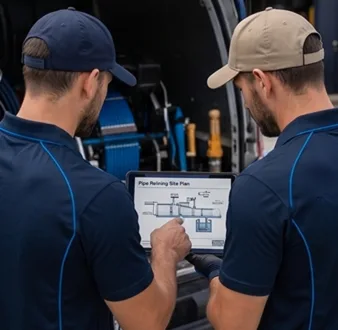
We find the fault, measure it from an access point, and check the fall is intact. That last check is what stops a liner being installed into a belly.
Per metre, with access and junction reinstatement itemised, and the excavation comparison alongside it so you can see both.
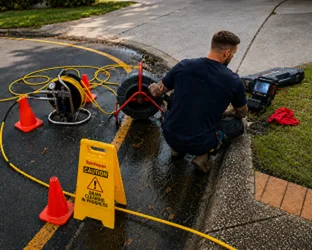
Clean, install, cure. One access point, one day for most homes, and no trench across the property.

Branches reopened, final footage, certificate and notification. Keep it with the property file, it is worth real money at sale.
Send it through and we will come back with what it is likely to be, what the survey costs, and whether relining is even the right conversation.
Cost, lifespan, method, and the cases where a liner is the wrong answer.

Call for the fastest answer, or send the form and we will arrange a camera survey before anything is quoted.

Leave your details and our local Darlington team will call you back fast.